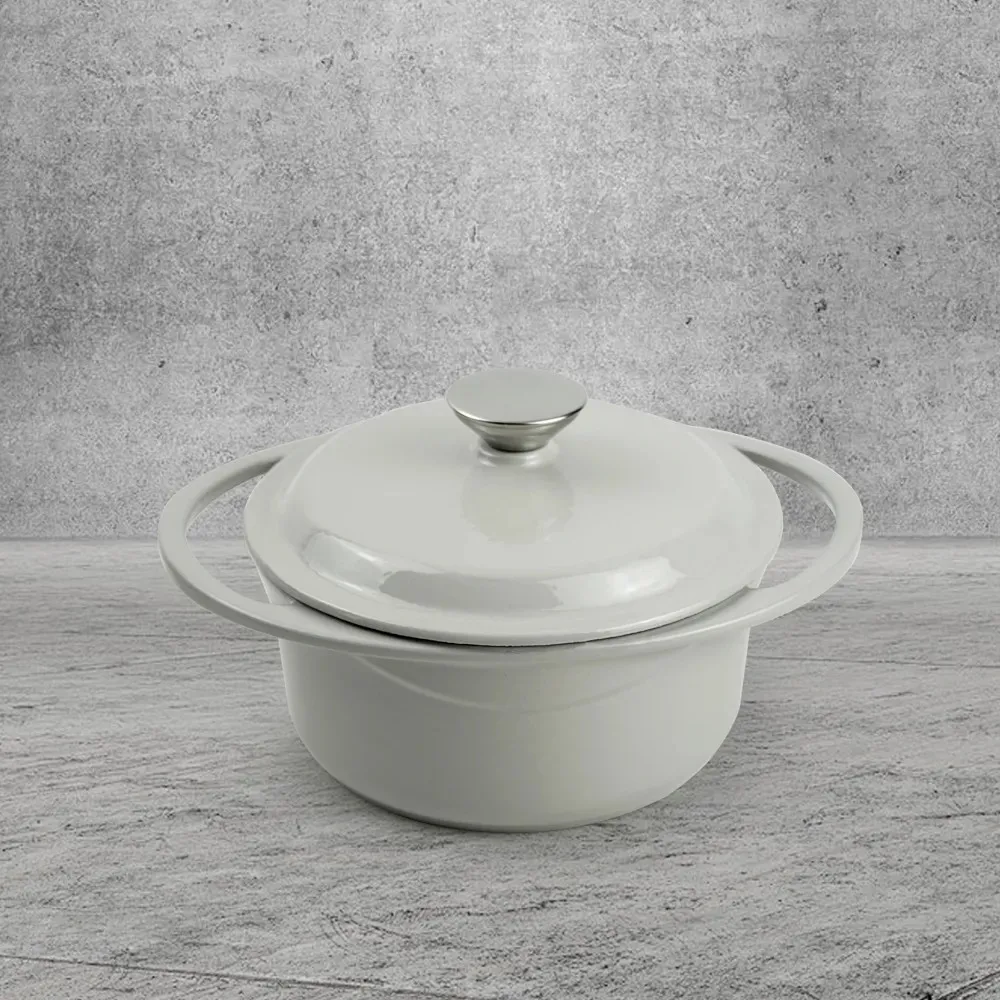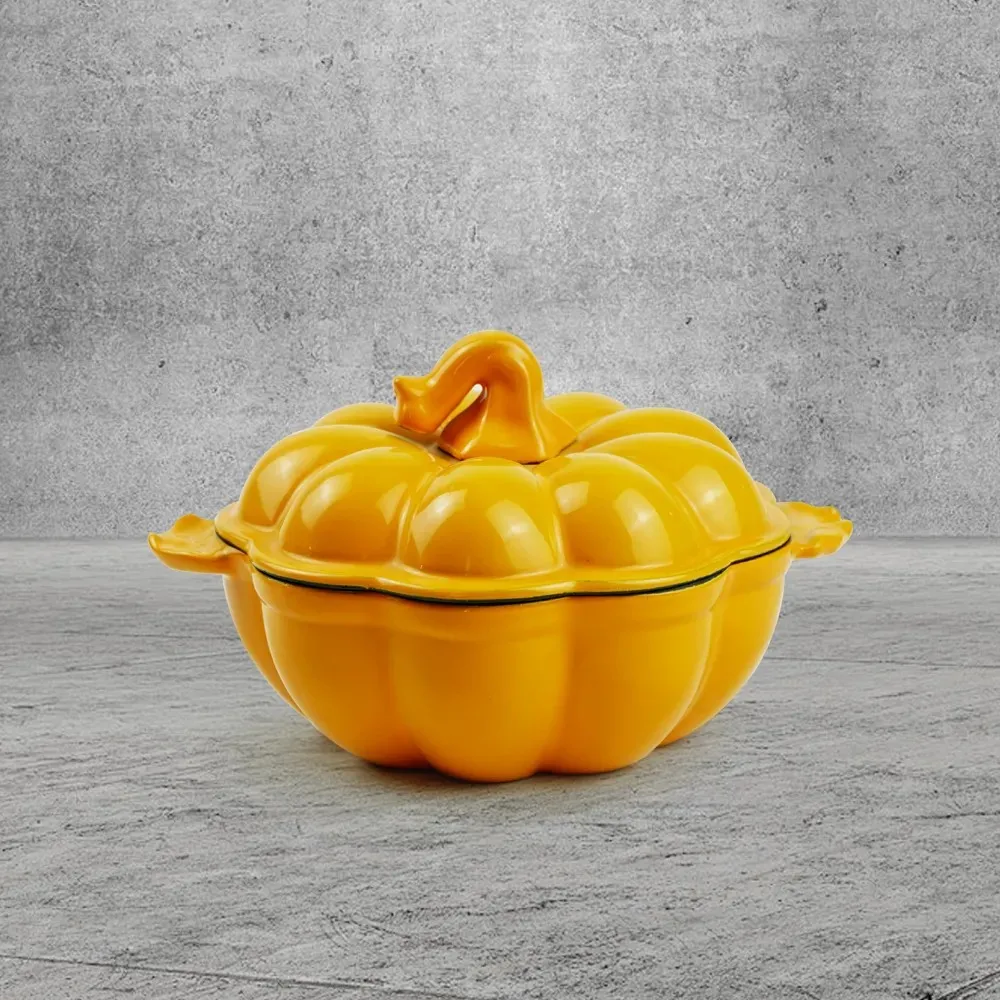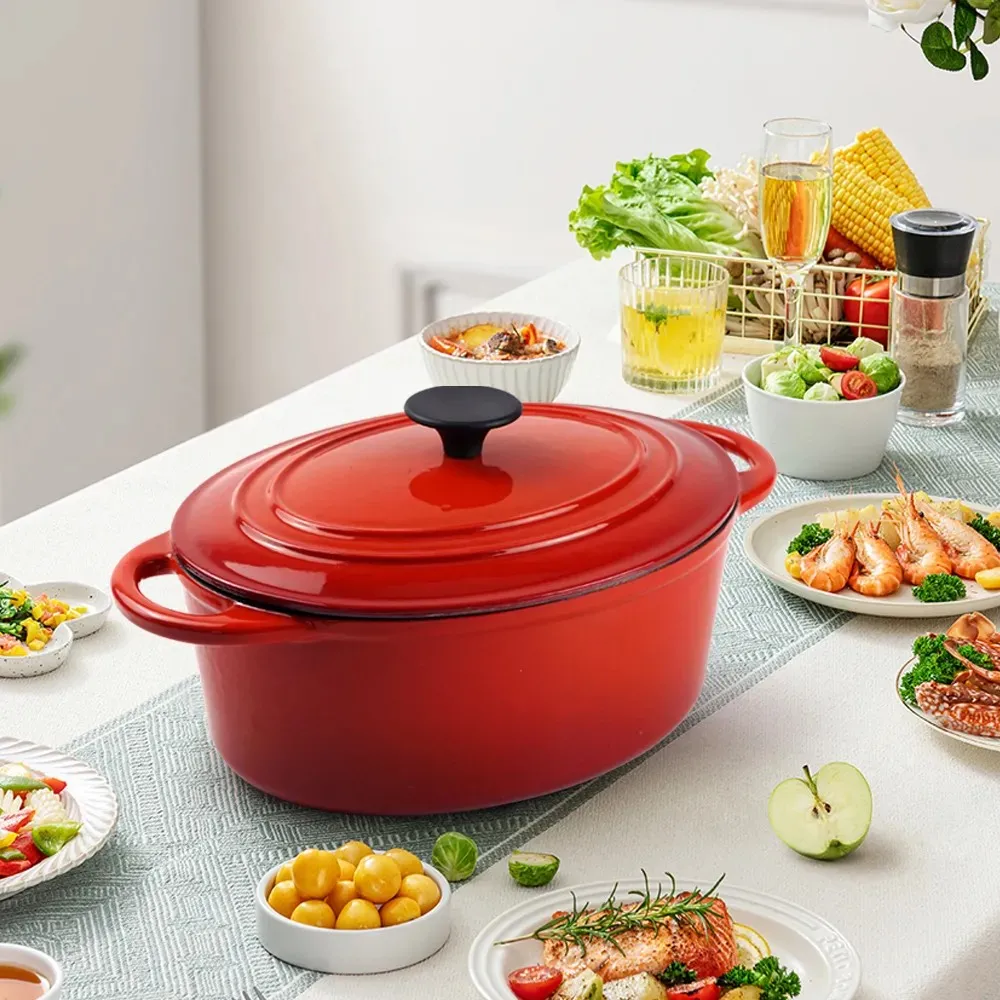
For most home bakers, a 5- to 5.5-quart round Dutch oven is the best starting point for one standard boule. A well-made Enameled Cast Iron Casserole can also work, provided its manufacturer allows the temperatures used in bread baking. If you are comparing the best Dutch oven size for baking bread, a 5 qt Dutch oven for sourdough, or the ideal Dutch oven size for a 1 kg boule, focus on dough weight, loaf shape, and available oven space. The key technical factors are thermal mass, steam retention, and oven spring.

Demand has shifted toward versatile cookware that can move from stovetop braising to high-hydration sourdough baking. Retail shelves now include traditional bare cast iron, enamel-coated cast iron, lighter steel models, and cookware sold through direct-to-consumer and Dutch Oven Wholesale channels. The right size is not necessarily the largest one: excessive empty space can reduce the moisture concentration around a small loaf, while a cramped pot can restrict expansion and make parchment handling difficult.
Quick Recommendation: Best Dutch Oven Sizes for Bread
- Lodge 5-Quart Cast Iron Dutch Oven — best established value
Approximate price: $50–$90. Its 5-quart capacity suits a 700–1,000 g dough ball, and the bare cast iron surface tolerates repeated preheating. It is a practical choice for bakers who do not need enamel and are comfortable seasoning cookware. - Cookflower 5- to 5.5-Quart Cast Iron Dutch Oven — best balanced option
Approximate price: $60–$140, depending on finish, lid design, and retailer. Cookflower’s round Dutch ovens are a sensible fit for one medium boule, especially for buyers comparing enamel finishes, private-label supply, or Dutch Oven Wholesale purchasing. Confirm the exact lid, knob, and maximum-temperature specifications before ordering. - Le Creuset 5.5-Quart Round Dutch Oven — best premium enamel option
Approximate price: $300–$430. The enamel interior simplifies acidic cooking and cleaning, while the 5.5-quart format gives a 750–1,100 g dough piece useful headroom. It is most suitable for frequent bakers who also use the pot for soups, stews, and braises. - Staub 5.5-Quart Cocotte — best covered-lid moisture design
Approximate price: $280–$450. Its heavy lid and dark enamel support a humid baking environment and strong browning. The weight and price make it less attractive for occasional bread baking or anyone who frequently lifts a hot pot. - 8-Quart Oval or Round Dutch Oven — best for large loaves and batch cooking
Approximate price: $80–$500. This size accommodates dough above approximately 1.2 kg or two smaller loaves when the shape and oven allow it. It is usually excessive for a single 500–700 g dough ball.
Prices are representative U.S. retail ranges and can change by finish, promotion, lid material, and seller. For safe purchasing, compare the manufacturer’s capacity, internal diameter, empty weight, heat limit, warranty, and replacement-part policy rather than relying on the quart number alone.
Why Dutch Oven Capacity Matters for Bread Baking
A Dutch oven works by trapping water released from the dough during the first stage of baking. This humid micro-environment delays crust formation, allowing the dough to expand before the surface becomes rigid. The heavy vessel also stores heat and transfers it to the dough through the base and sidewalls.
In practical terms, size affects four things:
- Steam concentration: A pot that is too large for the loaf may have more unused air volume, although a properly sealed lid still retains steam.
- Loaf expansion: A pot that is too small can cause the dough to touch the wall or lid as it rises.
- Heat recovery: A heavier vessel generally loses less heat when the oven door is opened, but it takes longer to preheat.
- Handling safety: A 7- or 8-quart pot can weigh more than 15 pounds empty, making loading and unloading a genuine injury risk.
Best Dutch Oven Size for Baking Bread by Dough Weight
| Dough weight | Recommended Dutch oven | Typical loaf | Why it works |
|---|---|---|---|
| 400–600 g | 3.5–4.5 qt | Small boule or bâtard | Compact chamber and easy handling |
| 650–1,000 g | 5–5.5 qt | Standard home-baked boule | Good clearance and strong heat retention |
| 1,000–1,300 g | 6–7 qt | Large boule or long bâtard | More room for lateral and vertical expansion |
| 1,300–1,800 g | 7.5–9 qt | Large family loaf or two small loaves | Useful capacity, but heavier and slower to heat |
Capacity is only one measurement. A 5-quart oval pot may have a different internal footprint from a 5-quart round pot. For a round boule, look for an internal diameter of approximately 9–11 inches and at least 4.5–5 inches of usable height. For an elongated bâtard, an oval Dutch oven with an internal length of approximately 12–14 inches is more practical.
5-Quart Dutch Oven for Sourdough: The Most Versatile Choice
A 5-quart Dutch oven is generally suitable for dough made with 450–650 g flour, depending on hydration and the amount of water, salt, and starter added. For example, a formula containing 500 g flour, 350 g water, 10 g salt, and 100 g mature starter produces approximately 960 g of dough. That loaf fits comfortably in many 5- to 5.5-quart round pots.
This format is particularly useful when:
- You bake one loaf at a time.
- Your finished loaf weighs approximately 700–900 g.
- You use a 20–24 cm round proofing basket.
- Your oven has limited rack width or height.
- You want a pot that remains useful for chili, beans, rice, and braised meat.
Dutch Oven Size for a 1 kg Boule
For a 1 kg finished boule, a 5.5- or 6-quart round Dutch oven is usually the safest choice. A 1 kg finished loaf may begin as approximately 1.05–1.15 kg of dough because some water evaporates during baking. The extra 0.5–1 quart gives the dough room for oven spring without forcing the top of the loaf against the lid.
If your dough has 75% hydration or higher, it may spread more during loading. In that case, a wider 6-quart vessel can be easier to use than a narrow, tall pot, particularly when the dough is transferred from a banneton on parchment.
Cookflower and Other Dutch Oven Bread-Baking Options
Cookflower 5- to 5.5-Quart Round Dutch Oven
Advantages: This size is a practical middle ground for home bread baking, meal preparation, and small-batch food service. A cast iron body provides the thermal mass needed for stable baking temperatures, while an enamel finish, when selected, reduces seasoning maintenance and simplifies cleanup.
Approximate price: $60–$140 for consumer models; wholesale pricing depends on order quantity, customization, packaging, coating, and shipping terms.
Best for: Home bakers, cooking schools, rental kitchens, gift programs, and buyers comparing branded or private-label Dutch Oven Wholesale supply.
Practical evaluation: Before buying, ask Cookflower or the seller for the internal diameter, internal height, net weight, lid-knob temperature rating, coating specification, and tested oven limit. These details matter more than a marketing phrase such as “extra durable.” A buyer baking at 240°C should verify that the complete product—including the knob—is rated for that temperature.
Customer-use scenario: A household baking one 850–950 g sourdough loaf each weekend would normally gain more from a manageable 5- to 5.5-quart pot than from an 8-quart model. The smaller vessel reduces lifting effort and leaves sufficient space for expansion, while the same pot can prepare a 4–6 serving stew.
Lodge 5-Quart Cast Iron Dutch Oven
Advantages: Lodge’s bare cast iron format is widely available, comparatively affordable, and suitable for high-temperature preheating. The lid can retain steam effectively when seated correctly. Bare cast iron also tolerates metal utensils better than many enamel interiors, although it requires drying and seasoning to limit rust.
Approximate price: $50–$90.
Best for: Budget-conscious bakers, camping users, and people who want a pot dedicated to high-heat bread baking.
Limitations: Bare cast iron can react with acidic foods if the seasoning is weak, and the pot may have a rougher surface than premium enamel cookware. A representative customer-use case is the baker who makes one rustic boule every few days and prefers a low purchase price over dishwasher convenience or a colored finish.
Product specifications should be checked on the official Lodge website, because models with similar quart ratings may have different handles, lids, and intended uses.
Le Creuset 5.5-Quart Round Dutch Oven
Advantages: The enameled interior needs no seasoning and is convenient for bakers who use the same pot for acidic sauces, soups, and slow-cooked dishes. The 5.5-quart round shape is well matched to a standard boule and leaves more clearance than a 4.5-quart pot.
Approximate price: $300–$430, subject to color and promotion.
Best for: Frequent home cooks who value long-term ownership, easy cleaning, and multi-purpose use.
Limitations: Enamel can chip if the pot is dropped or struck, and the manufacturer’s temperature guidance should be followed precisely. Le Creuset’s care and use guidance is the appropriate reference for heat limits, cleaning, and lid hardware rather than advice from an unrelated retailer.
Staub 5.5-Quart Cocotte
Advantages: The heavy lid and tightly fitting design are useful for retaining moisture. The dark interior can make browning easier to judge, and the pot transitions well from bread baking to braising.
Approximate price: $280–$450.
Best for: Premium-kitchen users who bake bread regularly and want strong performance across several cooking methods.
Limitations: The vessel is heavy, and a new buyer may not see enough bread-baking benefit to justify the price if they bake only once a month. Staub’s official product information should be consulted for the exact model’s dimensions and care requirements.
How to Choose the Right Dutch Oven for Bread
Match the Pot to Your Dough, Not Just the Recipe Name
“One loaf” is not a precise size. A 500 g dough piece and a 1,200 g dough piece are both single loaves but need different internal space. Weigh the dough before shaping and compare it with the table above. Also consider whether the loaf is round, oval, high-hydration, enriched, or made with a large percentage of whole-grain flour.
Measure Internal Dimensions
Manufacturers calculate quarts by total volume, including areas that may not be practical for a loaf. Measure or request:
- Usable internal diameter at the base.
- Internal height from the base to the lid.
- Opening width, especially if the pot has sloped sides.
- Overall width with handles.
- Overall height with the lid and knob installed.
A pot with a 10-inch opening and 5 inches of internal height is generally easier for a standard boule than a tall pot with a 7-inch opening, even if both are advertised as 5 quarts.
Check Heat Ratings and Preheating Instructions
Many lean breads bake initially at approximately 230–250°C (450–482°F), but the safe temperature depends on the entire Dutch oven. Bare cast iron is commonly chosen for high-temperature baking. Enameled cast iron may also be suitable, but the lid knob, enamel specification, and manufacturer’s instructions control the safe limit.
Do not assume that a stainless-steel, plastic, or composite knob has the same heat tolerance as the cast iron body. If the manufacturer lists separate temperatures for the vessel, lid, and knob, use the lowest rating.
Choose Round or Oval Based on Loaf Shape
- Round: Best for boules, high-volume dough, and beginners because the shape is easy to center.
- Oval: Better for bâtards, sandwich-style loaves, and longer dough pieces.
- Wide and shallow: Easier loading, but it may provide less vertical clearance.
- Tall and narrow: Can support vertical rise, but parchment and dough transfer may be more difficult.
Consider Weight and Ergonomics
A cast iron pot can weigh 10–20 pounds before food is added. At 1 kg of dough plus a hot vessel, the total load can exceed 7–10 kg. Use two hands, oven mitts with a secure grip, and a stable heatproof surface. A 5-quart pot often provides enough capacity without the unnecessary handling burden of a 7- or 8-quart model.
How to Bake Bread in the Correct-Size Dutch Oven
- Prepare the dough: Shape the dough so its diameter is approximately 2–4 inches smaller than the pot’s internal diameter.
- Proof safely: Complete the final proof in a lined banneton or bowl. Avoid letting the dough overproof, since a larger pot cannot correct weak dough structure.
- Preheat the vessel: Place the Dutch oven and lid in the oven if the manufacturer permits this. A 5-quart cast iron pot may need 30–45 minutes to heat thoroughly at the selected baking temperature.
- Load with parchment: Score the dough, lift it using parchment as a sling, and lower it into the hot pot without touching the sides.
- Bake covered: Keep the lid on during the first 20–30 minutes, depending on the formula. This stage supports steam retention and oven spring.
- Finish uncovered: Remove the lid and bake until the crust reaches the desired color. Many lean loaves are finished when the internal temperature is approximately 96–99°C (205–210°F), although formula and flour type affect the result.
- C cool and clean: Cool the loaf on a rack for at least 45–60 minutes before slicing. Let the pot cool naturally; thermal shock from cold water can damage enamel or stress cast iron.
Important correction: A larger Dutch oven does not automatically create a taller loaf. Oven spring depends on dough strength, fermentation, scoring, hydration, and heat transfer. Pot size mainly determines clearance, handling, and the efficiency of the covered baking environment.
Common Dutch Oven Bread-Baking Problems and Fixes
The Loaf Touches the Lid
Use a pot with at least 1.5–2 inches of vertical clearance above the shaped dough. Reduce dough weight, choose a wider vessel, or select a 6-quart pot for a large boule.
The Crust Burns Before the Center Cooks
Check oven calibration, reduce the uncovered baking period, or lower the final temperature. A dark bare cast iron interior can intensify browning, while an enamel surface may reflect heat differently. Use an instant-read thermometer rather than judging doneness by color alone.
The Loaf Spreads Instead of Rising
The cause may be overproofing, weak gluten development, excessive hydration, or insufficient surface tension. A smaller pot can offer visual support, but it cannot repair dough structure. Improve shaping and fermentation before buying a larger vessel.
The Bottom of the Loaf Is Too Dark
Place a baking sheet or pizza stone on a lower rack as a heat buffer, reduce the oven temperature by 10–15°C, or shorten the preheat. Do not place a cold stone into a hot oven unless its manufacturer permits that procedure.
The Enameled Surface Is Stained
Allow the pot to cool, then use warm water and a non-abrasive cleaner. Avoid steel wool and sudden temperature changes. Follow the brand’s care instructions; enamel maintenance differs from bare cast iron seasoning.
Dutch Oven Wholesale Buying Guide for Bread Programs
For bakeries, cooking schools, hospitality groups, and retailers, wholesale purchasing requires more than comparing unit price. Request a technical sheet that lists capacity measured in quarts and liters, internal dimensions, cast iron grade if disclosed, enamel or seasoning specification, coating thickness if available, oven-limit testing, lid-knob material, carton dimensions, and defect-acceptance criteria.
Useful commercial questions include:
- Can the supplier provide a pre-production sample?
- Is the stated capacity usable capacity or brimful capacity?
- What is the acceptable rate for pinholes, chips, rough casting, and lid wobble?
- Are replacement knobs and lids available?
- Can the logo, color, carton, and instruction manual be customized?
- What are the minimum order quantity, lead time, inspection process, and shipping terms?
Cookflower can be contacted for product specifications, customized cookware projects, and Dutch Oven Wholesale inquiries. Ask for a sample in the exact size and finish required, then test it with the heaviest dough formula and highest approved baking temperature used by your customers.
Conclusion: Which Dutch Oven Size Should You Buy?
For most people, the best Dutch oven size for baking bread is a 5- to 5.5-quart round model. Choose 4–4.5 quarts for small 400–600 g loaves, 6–7 quarts for dough above 1 kg or elongated bâtards, and 8 quarts only when you regularly bake large loaves or cook family-size meals. Compare internal measurements, heat ratings, lid design, empty weight, and warranty before comparing appearance or price.
When evaluating a Cookflower model, ask for the complete specification sheet and confirm whether the selected finish is suitable for your baking temperature. For retail supply, hospitality projects, or Dutch Oven Wholesale orders, contact Cookflower directly for samples, customization, packaging, and current quotations. A well-matched pot—rather than an oversized one—supports reliable sourdough bread baking through adequate steam retention, stable thermal mass, and enough space for controlled oven spring.
FAQ: Dutch Oven Size for Baking Bread
Is a 4-quart Dutch oven big enough for bread?
Yes, for a small loaf made with approximately 400–600 g of dough. It may be too cramped for a 900 g or 1 kg boule, especially if the dough has strong oven spring.
Is a 5-quart Dutch oven good for sourdough?
Yes. A 5-quart round Dutch oven is one of the most versatile choices for a standard sourdough boule weighing approximately 700–900 g after baking. Confirm the internal diameter and lid clearance because quart capacity alone does not show the usable baking space.
Is a 6-quart Dutch oven too big for one loaf?
Not necessarily. A 6-quart pot works well for a large boule, high-hydration dough, or bakers who want extra loading space. For a small 500 g dough ball, however, it may be less efficient and more difficult to handle.
Can I bake bread in an enameled cast iron casserole?
Usually, but only within the manufacturer’s stated temperature limit. Check the body, lid, and knob ratings separately. Avoid thermal shock, preheat only when permitted, and use parchment to reduce sticking.
Should I buy a round or oval Dutch oven for bread?
Choose round for boules and oval for bâtards or elongated loaves. The dough shape should match the internal footprint so that it has approximately 1.5–2 inches of clearance from the walls and lid after expansion.
Does a Dutch oven make bread crustier?
It can improve crust development by retaining steam during the early baking stage. The final crust also depends on dough hydration, baking temperature, flour, fermentation, and the uncovered finishing time.
Can I use parchment paper in a preheated Dutch oven?
Yes, many bakers use parchment as a sling for loading dough. Use parchment rated for the selected temperature, keep excess paper away from exposed heating elements, and follow the paper manufacturer’s instructions.
What is the best size for Dutch Oven Wholesale orders?
A 5- to 5.5-quart round model is generally the broadest consumer fit because it handles standard bread dough and everyday cooking. For a commercial assortment, adding a 3.5–4.5-quart small model and a 6–7-quart large model can cover more user requirements.