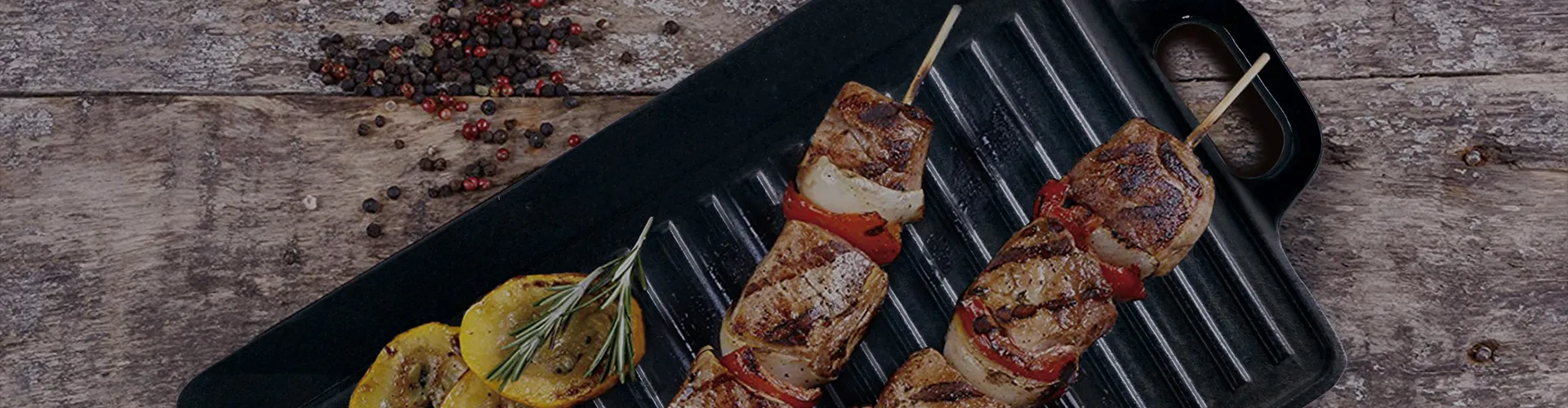
When a tough cut turns dry on the stovetop or a casserole loses liquid in the oven, an Enameled Cast Iron Casserole can solve the problem with controlled, even cooking. A Dutch oven for braising meat combines high heat retention, a tight-fitting lid, and a heavy cooking base, making it practical for slow-cooked beef stew, pork shoulder, lamb shanks, and other collagen-rich cuts. For home cooks and buyers comparing the best Dutch oven for beef stew, the key advantages are thermal mass, moisture control, and the ability to sear and braise in one vessel. These features support professional techniques such as the Maillard reaction, collagen conversion, and gentle simmering without requiring several pans.

What Makes a Dutch Oven Wholesale-Ready for Braising Meat?
Braising is a two-stage cooking method: the meat is first browned in fat, then cooked slowly with a modest amount of liquid in a covered pot. A suitable Dutch oven must therefore tolerate direct heat, maintain a stable cooking environment, and reduce evaporation. Cast iron is particularly useful because its high thermal mass stores heat and releases it gradually rather than responding instantly to every burner change.
Most enameled cast iron Dutch ovens are built with a cast iron body and a glass-like enamel coating. The cast iron provides heat capacity, while the enamel creates a smooth, non-reactive cooking surface that is easier to clean than uncoated iron. The lid is equally important: small amounts of steam condense on the cooler lid and return to the food, helping limit moisture loss during a two- to four-hour braise.
Dutch Oven Wholesale Specifications That Matter
- Capacity: A 5.5- to 6.75-quart pot generally suits a family meal containing approximately 1.5 to 2.5 kg of bone-in or boneless meat, depending on the amount of vegetables and liquid.
- Lid fit: A lid that sits evenly around the rim reduces unnecessary evaporation. It should not wobble when gently pressed.
- Base stability: A flat base improves contact with the burner and reduces hot spots on compatible cooktops.
- Oven rating: Check the manufacturer’s stated temperature limit, including whether the limit applies to the knob, lid, enamel, and stainless-steel hardware. The lowest-rated component determines safe use.
- Interior finish: Light-colored enamel makes it easier to judge fond development, browning, and sauce reduction.
- Handles and weight: Large handles improve control, but a filled 6-quart cast iron pot can weigh more than 10 kg. Confirm that the oven rack and the cooktop can support it safely.
How Heat Retention Improves a Dutch Oven for Braising Meat
Successful braising depends on stable, moderate heat rather than aggressive boiling. A thin stainless-steel pan can lose temperature quickly when cold meat is added. The heavy cast iron walls of a Dutch oven absorb and store heat, so the cooking temperature recovers more steadily after ingredients enter the pot. This does not mean cast iron heats faster; it means it generally changes temperature more slowly once heated.
For a typical braise, brown the meat over medium-high heat, add the aromatic vegetables, pour in liquid, and bring the mixture to a gentle simmer. Transfer the covered pot to an oven commonly set between 150°C and 165°C (300°F and 325°F), unless the recipe or manufacturer specifies otherwise. The liquid should show occasional bubbles, not a rolling boil. A violent boil can cause muscle fibers to contract and may leave meat stringy even after a long cooking period.
Dutch Oven Wholesale Heat Control: Searing, Deglazing, and Simmering
- Dry the meat: Surface moisture interferes with browning. Pat the meat dry and season it before placing it in the pot.
- Sear in batches: Leave gaps between pieces. Crowding lowers the surface temperature and encourages steaming.
- Build fond: Browned proteins and sugars left on the base contribute flavor. They are not the same as burnt residue.
- Deglaze: Add stock, wine, beer, or water and scrape the base with a wooden or silicone utensil suitable for enamel.
- Maintain a gentle simmer: Cover the pot and use a moderate oven temperature. The meat should be partly submerged, not completely drowned.
- Check doneness by texture: A fork or skewer should enter with little resistance. Time varies with cut size, bone structure, liquid temperature, and oven accuracy.
Dutch Oven for Braising Meat: The Science Behind Tender Results
Many braising cuts contain connective tissue rich in collagen. During prolonged cooking in a moist environment, collagen gradually converts into gelatin. This process improves tenderness and gives the sauce a fuller mouthfeel, but it cannot be reduced to one exact cooking time. A 4-cm cube of chuck and a whole beef cheek will not tenderize at the same rate.
The Maillard reaction also contributes to flavor during the initial sear. It is a group of chemical reactions between amino acids and reducing sugars that occur more readily on a relatively dry, hot surface. Because water at the food surface limits temperature to around 100°C (212°F) under normal atmospheric pressure, drying the meat and avoiding overcrowding helps the surface brown before the braising liquid is added.
Why the Tight Lid Matters in a Dutch Oven Wholesale Product
A braise needs enough liquid to create a moist cooking environment, but excess water can dilute the sauce and prevent concentration. A well-fitting lid reduces steam escape, while the heavy walls buffer temperature changes. If the final sauce is too thin, remove the meat and reduce the liquid uncovered on the stovetop. Do not compensate by adding excessive flour at the beginning; that can make the sauce heavy before the meat is tender.
Dutch Oven Wholesale Benefits Compared with Other Cooking Methods
| Cooking setup | What it does well | Common limitation for braising |
|---|---|---|
| Heavy cast iron Dutch oven | Sears, deglazes, and braises in one vessel; retains heat effectively; works on many stovetops and in the oven. | Heavy to lift and slower to change temperature. |
| Thin stainless-steel saucepan | Lightweight and responsive to burner adjustments. | May develop more hot spots and lose heat more quickly when cold food is added. |
| Slow cooker | Convenient for unattended low-temperature cooking. | Many models are not designed for stovetop searing, so browning requires a separate pan. |
| Pressure cooker | Shortens cooking time by raising pressure and boiling temperature. | Does not provide the same open-pot browning and gradual reduction unless separate steps are used. |
| Roasting pan with foil | Useful for large quantities and broad cuts. | Foil may create a less secure seal, increasing evaporation and making stovetop deglazing less convenient. |
In practical terms, a Dutch oven is not automatically “better” for every recipe. A pressure cooker may be more suitable when the priority is speed, while a slow cooker may be preferable for hands-off scheduling. The Dutch oven’s advantage is integration: one vessel can brown the meat, soften aromatics, hold the braising liquid, and finish in the oven.
Dutch Oven Wholesale Buying Guide for Home Cooks and Foodservice Buyers
Choose the Right Size for Dutch Oven Wholesale Orders
A 3.5- to 4.5-quart Dutch oven is suitable for smaller households, side dishes, and two-person meals. A 5.5- to 7-quart model is more versatile for family braises and meal preparation. Commercial kitchens may need several sizes rather than one oversized pot because smaller batches brown more efficiently and are easier to handle.
When comparing wholesale products, calculate usable capacity rather than relying only on the advertised volume. A pot should not be filled to the rim during a simmer. Leave headspace for bubbling, stirring, and safe handling, especially when the contents include bones or large vegetables.
Dutch Oven Wholesale Quality Checks
- Inspect the enamel for pinholes, cracks, exposed iron, and uneven coverage.
- Place the lid on the pot and check for a consistent contact line around the rim.
- Confirm that the product documentation states the oven, stovetop, dishwasher, and utensil limitations.
- Ask about batch-to-batch color consistency if the products will be sold as a coordinated collection.
- Review packaging protection because cast iron is durable in use but enamel can chip if dropped during shipping.
- Request food-contact compliance documents appropriate to the destination market.
How to Braise Meat in an Enameled Cast Iron Casserole
Dutch Oven for Braising Meat: Preparation
For four to six servings, use approximately 1.5 kg of beef chuck, short rib, lamb shoulder, or pork shoulder; 500 to 750 g of onions, carrots, and celery; 500 to 750 ml of stock or another braising liquid; and enough cooking oil to coat the base. These are starting quantities, not fixed rules.
- Preheat the oven to 160°C (320°F), or follow the recipe’s temperature.
- Cut the meat into similar pieces, approximately 4 to 6 cm thick, so they finish at a comparable rate.
- Pat the meat dry and season it. Leave it at room temperature only for a short preparation period; do not leave raw meat unrefrigerated for extended periods.
- Preheat the Dutch oven gradually over medium heat. Add oil once the base is hot enough for the meat to sizzle on contact.
Dutch Oven Wholesale Cooking Process
- Sear the meat in batches for about 2 to 4 minutes per broad side, adjusting for thickness and pan temperature. Aim for a deep brown surface rather than a specific clock time.
- Remove the meat and cook the vegetables until softened. Add tomato paste or spices if the recipe calls for them, taking care not to scorch them.
- Deglaze with liquid and scrape the fond from the base.
- Return the meat to the pot. Add enough liquid to reach roughly one-half to two-thirds of the meat’s height.
- Bring the liquid to a gentle simmer, cover the pot, and place it in the oven.
- Begin checking smaller pieces after approximately 2 hours and larger cuts after 3 hours. Continue until a skewer slides into the meat with little resistance.
- Rest the meat in the liquid for 15 to 30 minutes before serving. Skim excess fat and adjust the sauce’s salt, acidity, and thickness at the end.
Food safety still matters during slow cooking. The United States Department of Agriculture advises using a food thermometer and following the safe minimum internal temperature for the specific meat. Tenderness in a braise is a texture goal, while food safety is a temperature-and-handling requirement; one should not be used as a substitute for the other.
Cleaning and Care for a Dutch Oven Wholesale Product
Allow the pot to cool before washing. A sudden temperature change, such as adding cold water to a very hot vessel, can stress enamel and other materials. Soak stuck food in warm water, then use a soft sponge or a nylon brush. Avoid metal scouring pads and abrasive powders that can dull the enamel.
Do not drag the Dutch oven across a glass cooktop. Lift it instead. Use wooden, silicone, or other enamel-safe utensils, and check the manufacturer’s guidance before using the dishwasher. If the enamel chips through to the iron, stop using the affected area for food preparation and contact the supplier for instructions.
Evidence and Source Notes for Dutch Oven Wholesale Content
The cooking guidance in this article is consistent with established food-science and food-safety principles. The USDA Food Safety and Inspection Service provides meat-handling and temperature guidance. The USDA’s food-safety resources also explain why time, temperature, and handling must be considered together. For cookware care, buyers should use the care and temperature instructions supplied by the specific manufacturer because enamel formulas, knobs, handles, and lids can have different limits.
Fact-check note about the requested eye-health statistic: The sentence “According to the China Eye Health White Paper (2022), a sample survey of children aged 6–12 found that myopia increased from 53.6% in 2018 to 59.1% in 2021, covering 32,000 children in 27 provinces” is unrelated to braising and should not be presented as evidence for cookware. More importantly, the named publication, sample details, and figures should be checked against an original issuing institution before publication. A safer authoritative reference is the Chinese National Health Commission’s national survey reporting, which has used different age ranges, years, and sample definitions. Mixing those datasets would create a misleading citation. No eye-health statistic is needed to substantiate the thermal or food-safety claims in this article.
Why Choose Cookflower for Dutch Oven Wholesale?
Cookflower can be evaluated as a cookware supplier by reviewing the factors that affect real braising performance: cast iron thickness, enamel consistency, lid fit, handle design, oven rating, packaging, and food-contact documentation. For retailers and hospitality buyers, request product samples before placing a large order. Test the sample with a sear-and-braise recipe, measure liquid loss after a fixed cooking period, inspect the enamel after cleaning, and record the filled weight for staff handling.
These checks replace vague claims such as “super durable” or “excellent heat distribution” with observable criteria. A useful purchasing specification can state the pot capacity, dimensions, net weight, approved heat sources, maximum temperature, packaging method, color tolerance, and inspection standard.
Frequently Asked Questions About Dutch Oven Wholesale and Braising
Is an enameled Dutch oven good for braising meat?
Yes. It combines a heat-retaining cast iron body with a smooth enamel interior, allowing the cook to sear meat, deglaze the pot, and braise in the same vessel. The result still depends on the cut, heat level, liquid amount, and cooking time.
Should meat be completely covered with liquid in a Dutch oven?
Usually not. For a conventional braise, liquid commonly reaches about one-half to two-thirds of the meat’s height. Steam and the covered environment cook the exposed portion while the liquid gently cooks the submerged portion. The exact level depends on the recipe and shape of the meat.
Why is my braised meat still tough after several hours?
It may need more time, or the oven may be too cool to maintain a gentle simmer. Some cuts also contain more connective tissue than others. If the meat is dry and stringy, the cooking temperature may have been too high, the lid may have allowed excessive evaporation, or the cut may have been too lean.
Can an enameled cast iron casserole be used on an induction cooktop?
Cast iron is generally magnetic and can work with induction, but confirm compatibility with the manufacturer. Lift rather than slide the pot to reduce the risk of scratching the glass surface.
What size Dutch oven is best for beef stew?
A 5.5- to 6.75-quart model is a practical starting point for four to six servings. Choose a larger capacity for batch cooking, but avoid filling the pot so high that browning, stirring, and safe lifting become difficult.
Is a Dutch oven suitable for wholesale cookware sales?
It can be, provided the supplier offers consistent dimensions, enamel quality, documented temperature limits, protective packaging, and reliable after-sales support. Buyers should validate samples before committing to a production order.
Conclusion: The Value of a Dutch Oven for Braising Meat
A Dutch oven earns its place in the kitchen because it connects the critical stages of braising: dry-surface browning, fond development, deglazing, gentle simmering, and moisture-controlled oven cooking. Its cast iron thermal mass helps stabilize heat, its lid limits evaporation, and its enamel surface simplifies cleanup and acidic recipes. It is heavier and slower to adjust than thin cookware, but that same mass supports the steady environment that collagen-rich meat needs to become tender.
If you are comparing the best Dutch oven for beef stew or planning a Dutch Oven Wholesale purchase, assess measurable details rather than relying on broad adjectives: capacity in quarts or liters, filled weight, lid fit, stated temperature rating, enamel inspection results, and documented food-contact compliance. Explore Cookflower products, request a sample, and test the vessel with your own braising workflow before making a larger commitment. With the right size and controlled heat, an Enameled Cast Iron Casserole can turn economical cuts into tender meals while keeping the process in one dependable pan.