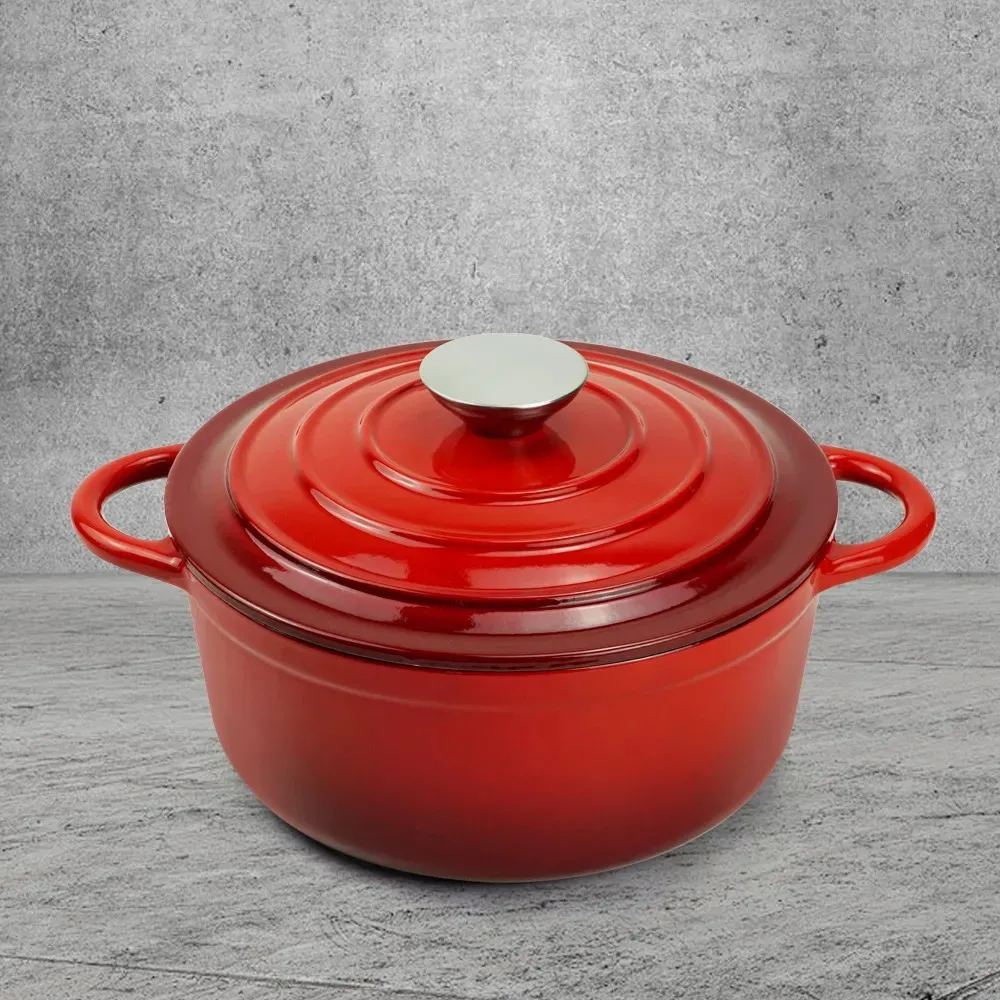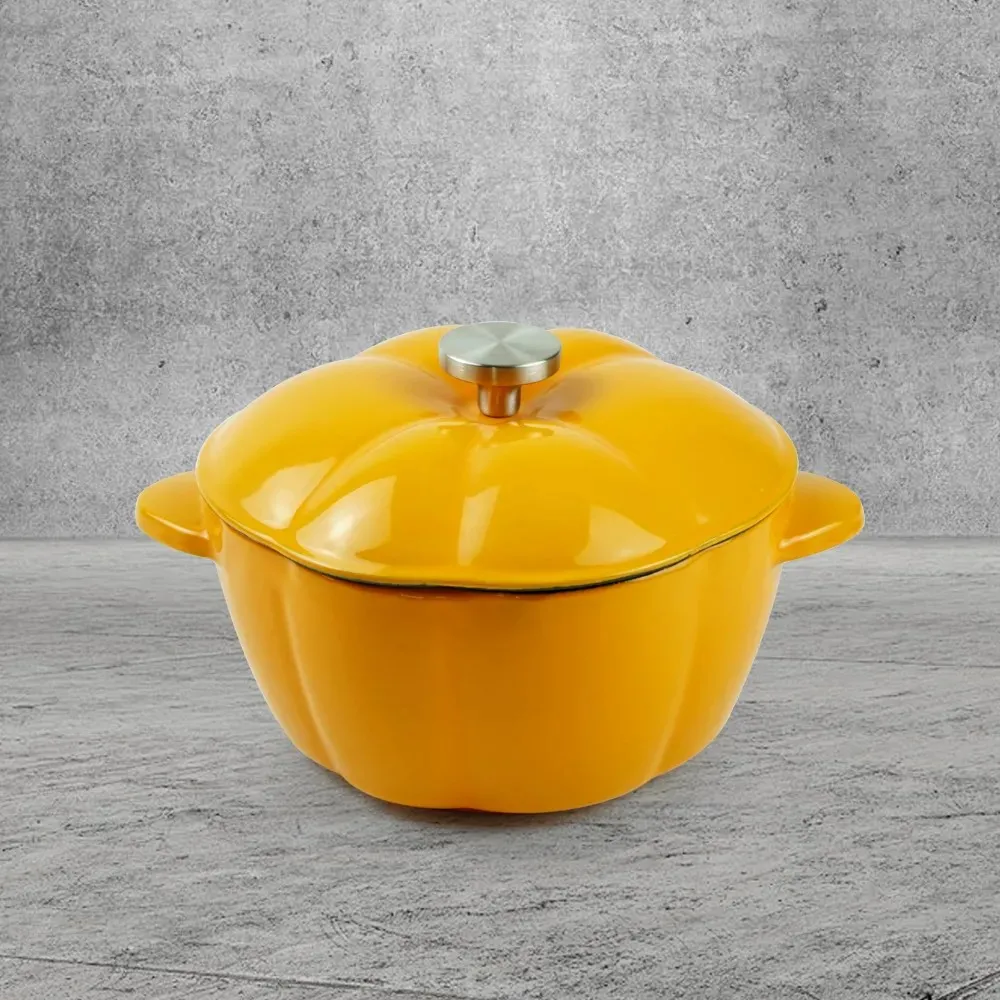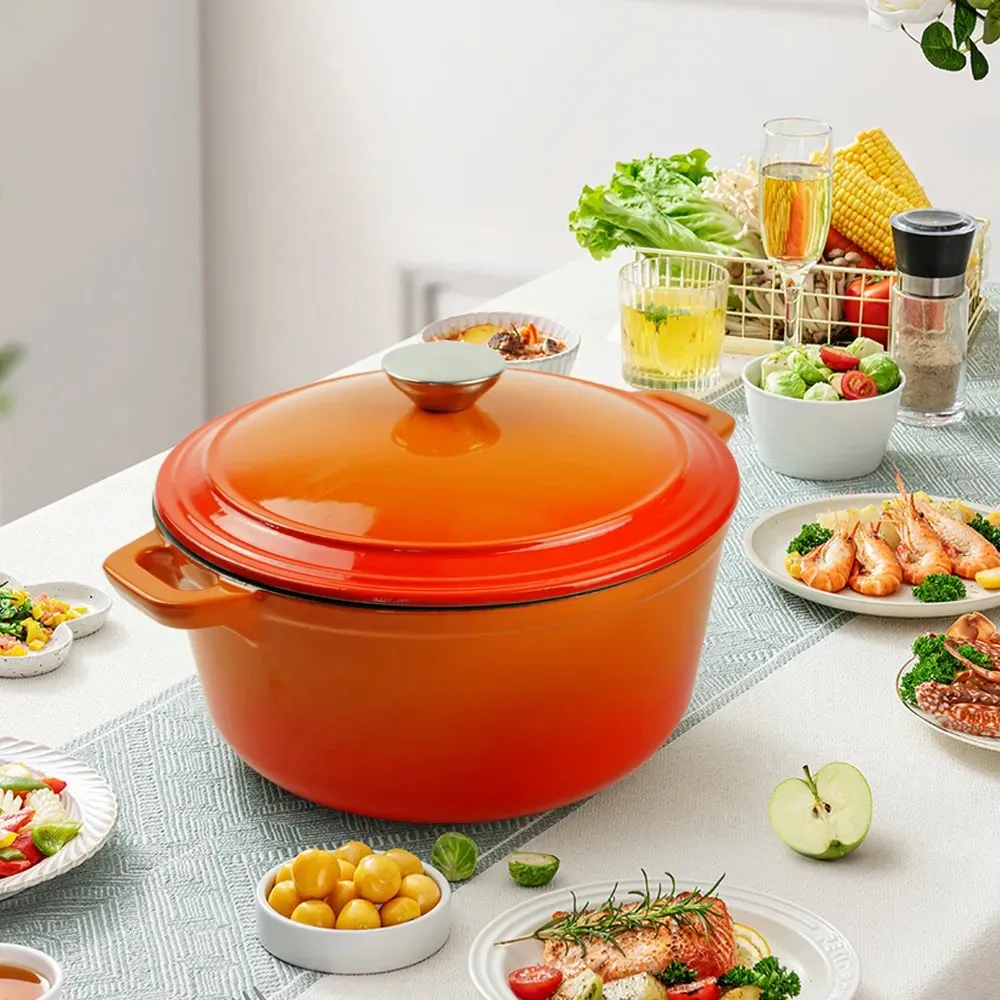
When an Enameled Cast Iron Casserole produces dry meat, watery sauce, or a scorched base, the problem is often the lid rather than the recipe. Choosing the best Dutch oven for braising means examining the Dutch oven lid for slow cooking, the pot’s heat retention, its self-basting performance, and its vapor management. These details determine whether a tough beef cheek becomes tender, whether vegetables retain their shape, and whether a sauce reduces at a controlled rate during a three-hour cook.

Dutch Oven Wholesale Buying Guide: What the Lid Actually Controls
A Dutch oven lid is not simply a cover. It forms a small cooking environment in which heat, steam, and liquid continuously move. During braising, the food is usually cooked with a modest amount of liquid in a covered pot. The lid controls how much moisture leaves, how much condensation returns, and how evenly the upper surface of the food cooks.
For retailers and home cooks comparing Dutch oven wholesale products, the key specifications are lid weight, fit, interior geometry, handle design, material, and the presence or absence of condensation features. A heavier lid can reduce temperature fluctuations, while a close-fitting lid can slow evaporation. Neither feature is automatically better: the correct design depends on whether the recipe requires moisture retention, sauce reduction, or both.
Dutch Oven Wholesale Lid Fit and the Evaporation Problem
A lid that fits closely reduces the escape of water vapor. This matters because braising liquid can evaporate faster than expected in a wide pot or during a long cook. If the liquid level falls too far, exposed ingredients may dry out and the base of the pot may overheat.
However, a completely airtight lid is not necessary for normal braising. Steam must still be able to move around the food, and a small amount of evaporation helps concentrate flavor. The practical goal is controlled evaporation. A lid with an uneven rim, a warped edge, or excessive side-to-side movement can release moisture inconsistently, making the same recipe produce different results from one batch to another.
Best Dutch Oven for Braising: Lid Weight and Thermal Mass
Cast iron has high thermal mass, so it absorbs and releases heat gradually. This supports stable simmering after the pot has been brought to temperature. A dense lid contributes additional thermal mass and helps reduce rapid temperature changes when the oven door is opened or cold ingredients are added.
This does not mean that a heavier lid automatically cooks food faster. In fact, the pot may take longer to preheat because more metal must reach the target temperature. The benefit is steadier heat, not higher cooking speed. For slow-cooked dishes, stable temperatures are usually more valuable than rapid heating.
Dutch Oven Lid for Slow Cooking: How Condensation Returns Moisture
As food and braising liquid heat, water vapor rises toward the lid. The lid is usually cooler than the steam, so some vapor condenses into droplets. A flat lid allows those droplets to collect and fall in a few locations. A textured, domed, or patterned lid can distribute condensation more widely across the food.
This process is often called a self-basting effect. It does not create additional liquid; it returns part of the moisture that would otherwise escape. The result can be particularly useful for chicken thighs, pork shoulder, short ribs, and beans, where a moist cooking environment supports softening over time.
Self-Basting Lid Design vs. Flat Lid Design
| Feature | Self-basting or textured lid | Plain flat lid | Practical effect |
|---|---|---|---|
| Condensation pattern | More distributed return of droplets | Often returns droplets near the rim or in fewer areas | Can reduce dry patches on the upper surface of food |
| Moisture retention | Depends on lid fit and rim accuracy | Also depends primarily on fit and evaporation rate | Surface texture alone does not guarantee a moist result |
| Cleaning | More grooves and details to wash | Usually simpler to wipe clean | Relevant for commercial kitchens and high-volume use |
| Weight and handling | May be heavier or more complex | May be easier to lift and store | Important when a full pot weighs several kilograms |
The lid pattern should therefore be evaluated with the rim seal and interior shape. A decorative pattern cannot compensate for a poor fit. Cookflower buyers should request measurements for the lid diameter, rim contact area, knob clearance, and oven-safe temperature rating before selecting a product for repeated braising.
Enameled Cast Iron Casserole Lid Design for Different Cooking Problems
Preventing Dry Meat During a Three-Hour Braise
Dry meat usually results from a combination of excessive heat, insufficient liquid, uncovered cooking, or cooking the wrong cut for the chosen method. A well-fitting lid helps by limiting evaporation, but it cannot correct a burner that is too hot.
- Brown the meat in a small amount of oil, then remove it temporarily.
- Add aromatics and deglaze the pot so browned material does not remain dry on the base.
- Return the meat and add liquid to approximately one-half to two-thirds of its height, depending on the recipe.
- Bring the liquid to a gentle simmer rather than a vigorous boil.
- Cover the pot and maintain a low oven temperature or low stovetop setting.
- Check the liquid level once during a long cook, opening the lid briefly rather than repeatedly.
The lid supports moisture control, while time, temperature, collagen-rich cuts, and adequate liquid determine tenderness. A lid cannot make lean meat behave like a collagen-rich cut such as chuck or pork shoulder.
Reducing Sauce Without Losing the Braising Benefit
Many cooks face a conflict: a covered pot protects the meat, but the sauce may remain too thin. The solution is usually a two-stage process. Braise with the lid on until the meat is tender, then remove the meat and reduce the liquid uncovered. This separates moisture retention from sauce concentration.
Trying to achieve both goals with the lid partially open can produce uneven results. Steam may escape too quickly at the opening, while the remaining cover still limits browning. A controlled uncovered reduction gives the cook a clearer visual signal: the sauce level falls and its viscosity increases.
Managing Foaming and Overflow
Beans, grains, milk-based dishes, and starchy stews can foam. A lid with a secure knob and enough clearance is safer to lift than a lid that is difficult to grip. During these recipes, avoid filling the pot to the rim. Leave headspace for expansion and bubbling, and reduce the heat if liquid reaches the lid.
Dutch Oven Wholesale Comparison: With the Right Lid vs. Without It
The following comparison describes practical cooking outcomes rather than promising identical results for every recipe.
| Cooking condition | With a well-fitting lid | Without a lid or with a poor fit |
|---|---|---|
| Moisture | Evaporation is reduced and more condensation returns to the pot | Liquid can reduce rapidly, especially in a wide pot |
| Heat stability | Food cooks in a more enclosed thermal environment | Heat and moisture leave directly from the surface |
| Meat texture | Suitable for gradual tenderization when temperature and time are correct | Exposed surfaces may dry before connective tissue softens |
| Sauce | Retains more water during the braise; reduction can be done afterward | May become concentrated before the meat is tender |
| Energy use | Less heat may be needed to maintain a simmer after preheating | More heat may be lost from the open surface |
For a direct kitchen test, prepare the same recipe in two identical pots, using the same weight of meat, starting liquid, oven temperature, and cooking time. Weigh the pot before and after cooking, excluding the lid only if the same measurement method is used for both samples. The change in mass gives an approximate indication of water loss. This test is more reliable than describing one lid as “excellent” without measurements.
How to Choose an Enameled Cast Iron Casserole Lid for Induction and Oven Use
Dutch Oven for Induction Cooking: Base and Lid Compatibility
Induction cooking heats compatible magnetic cookware through an electromagnetic field. Cast iron is generally induction-compatible, but the cooking surface should be checked for flatness and protected from dragging, which can scratch a glass-ceramic hob. The lid does not need to be magnetic to perform its moisture-control function.
Ask the manufacturer for the product’s induction guidance rather than assuming every enamel finish is identical. A flat base, stable handles, and a lid that can be lifted safely with oven gloves are more useful in daily operation than a decorative specification.
Enamel Surface, Rim, and Maintenance
Enamel is a glass-like coating applied to cast iron. It provides a relatively non-reactive cooking surface and avoids the seasoning routine required by traditional bare cast iron. It can still chip if the lid is dropped or struck against a hard surface, so metal utensils and abrasive cleaners should be used only when the manufacturer permits them.
Before buying for a restaurant, inspect the lid rim for continuous contact, check the enamel for pinholes or chips, and confirm whether replacement knobs and lids are available. For household use, a lid that weighs too much to lift comfortably can become a safety problem even if its heat-retention characteristics are strong.
Frequently Asked Questions About Dutch Oven Lid Design
Does a heavier Dutch oven lid make food cook faster?
No. A heavier lid increases thermal mass and may improve temperature stability, but it can also increase preheating time. Cooking speed depends mainly on heat input, food mass, vessel geometry, and the target temperature.
Is a self-basting lid necessary for braising?
No. A close-fitting plain lid can braise successfully. A textured or domed lid may distribute condensation more widely, but the cooking method still requires an appropriate cut, sufficient liquid, controlled heat, and enough time.
Why is my braising liquid disappearing?
Common causes include a loose lid, a wide pot, excessive heat, an uncovered cooking stage, or an insufficient starting volume. Check the lid fit and reduce the heat to a gentle simmer. If the sauce is thin after the meat is tender, reduce it separately without the lid.
Can an enameled cast iron casserole be used on induction?
Many cast-iron casseroles work on induction, but confirm the manufacturer’s instructions and check that the base is flat. Lift rather than drag the pot across a glass cooking surface.
How full should a Dutch oven be during slow cooking?
Leave headspace for bubbling, especially with beans, grains, and starchy dishes. The exact fill level depends on the recipe and vessel size, but liquid should not reach the rim or press against the lid during a simmer.
What should a restaurant or retailer ask a Dutch Oven Wholesale supplier?
Ask for the lid and pot dimensions, material composition, enamel specification, oven and induction limits, weight, carton testing, replacement-part availability, and quality-control tolerance for the rim. Request production samples before placing a large order so the lid fit can be tested with water-loss and handling checks.